info@burlesonfamilydental.com
 (817) 547 0597
Dental Implants or Bridges: Which Option Restores Your Smile Best?
Quick Answer
A dental implant replaces a missing tooth root with a small post in the jawbone and supports a crown, while a bridge fills a gap by attaching an artificial tooth to neighbouring teeth. The right choice depends on oral health, bone support, the condition of nearby teeth, and treatment goals. A dentist can assess these factors and recommend a suitable option.
Losing a tooth can affect more than the appearance of your smile. It may change how you chew, influence the way nearby teeth fit together, and leave an area of the jaw without the stimulation provided by a natural root. A dental implant is one tooth-replacement approach that addresses the missing root as well as the visible tooth. Understanding how implants and other restorations work can help you make a confident decision during a dental consultation.
Understanding How Tooth Replacement Options Work
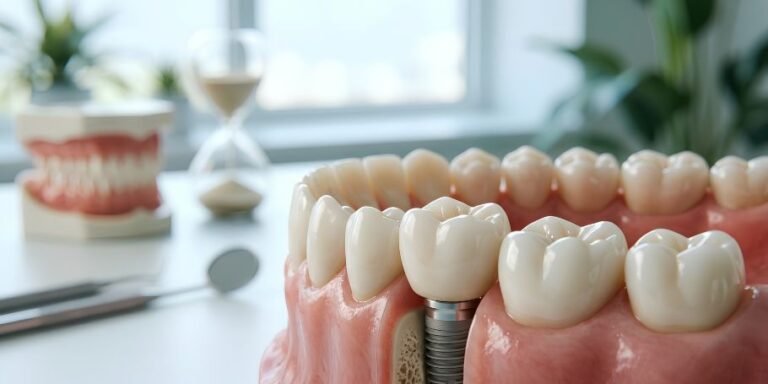
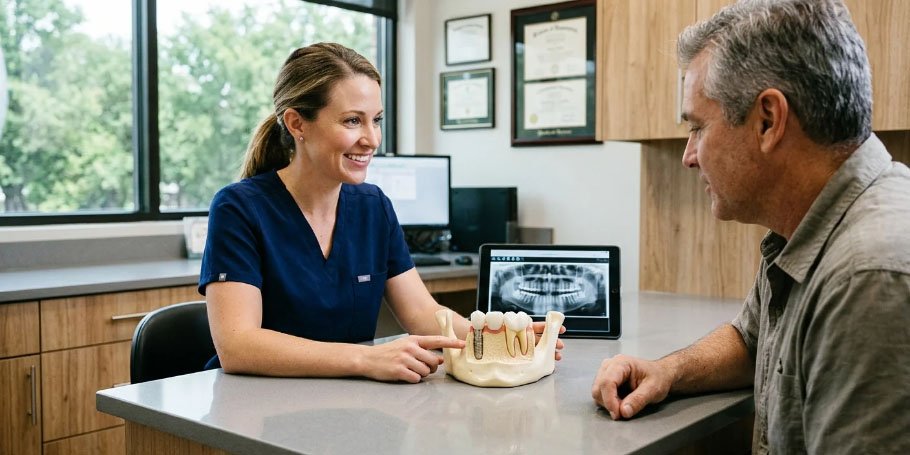
A tooth replacement is designed to restore function and fill the space left by a missing tooth. An implant restoration usually includes three parts: the implant post, an abutment, and a crown. The post is placed in the jawbone, the abutment connects it to the crown, and the crown is shaped to blend with surrounding teeth. Over time, the bone bonds with the implant through a process called osseointegration.
A bridge uses the teeth beside the gap or other planned supports to hold an artificial tooth in place. Its design depends on the number and position of missing teeth and the condition of the supporting teeth. Both options can restore chewing and appearance, but they differ in how they are supported and maintained.
Who May Be a Candidate for an Implant or Bridge?
There is no single replacement that suits every patient. A dentist reviews the mouth, medical history, and treatment priorities before recommending a plan.
Factors Considered During Treatment Planning
- Gum health: Active gum disease should be addressed before restorative treatment.
- Bone support: An implant needs adequate jawbone volume, although grafting may be considered.
- Condition of nearby teeth: Existing restorations or damage can affect whether a bridge is appropriate.
- General health: Certain conditions, medications, and smoking habits can influence healing.
- Daily care: Patients should be able to clean the restoration and attend routine visits.
A bridge may be considered when adjacent teeth can reliably support it. An implant may be suitable when surrounding teeth are healthy and preserving them is a priority. The recommendation is made after a clinical review rather than from appearance alone.
The Treatment Process Step by Step
The schedule varies depending on the restoration and whether additional procedures are needed.
- Consultation and planning: The dentist evaluates the missing tooth, bite, gums, and nearby teeth. X-rays or imaging may help assess bone and plan treatment.
- Preparation: For a bridge, supporting teeth may be shaped and impressions or digital scans taken. For an implant, the site is prepared for placement.
- Placement: The implant post is placed in the jawbone, or the bridge is fitted to its supporting teeth. A temporary restoration may be used.
- Healing and review: An implant needs time to integrate with the bone. A bridge may require follow-up to check comfort and fit.
- Final restoration: The custom crown or bridge is secured, and the dentist checks the bite and appearance.
What to Expect During Recovery
After implant placement, some tenderness, swelling, or minor bleeding can occur for a short time. Many patients return to everyday activities within a few days, although bone healing takes longer. Follow the dentist’s instructions for oral hygiene, medication, and food choices. Soft foods may be recommended initially, while hard or sticky items should be avoided during healing.
A bridge usually does not involve the same bone-integration period, but the mouth may feel sensitive after supporting teeth are prepared. Contact the dental office if pain worsens, swelling increases, or the restoration feels loose. Follow-up visits help the dental team identify concerns early.
Benefits and Considerations of Each Option
Implants and bridges can both provide reliable tooth replacement when selected and maintained appropriately.
Potential Advantages of Implants
- Replace the tooth root as well as the visible crown.
- Help maintain jawbone stimulation.
- Do not require reshaping of healthy neighbouring teeth for support.
- Provide a fixed restoration that can be cleaned daily.
Potential Advantages of Bridges
- May restore a gap without implant surgery.
- Can often be completed in a shorter timeframe.
- May be useful when neighbouring teeth already need crowns.
- Offer a fixed replacement rather than a removable appliance.
The choice also involves cost, treatment time, maintenance, and individual clinical needs. No restoration is maintenance-free, and outcomes depend on proper planning, oral hygiene, and regular dental care.
Implants Compared With Bridges
| Factor | Implant-Supported Crown | Fixed Dental Bridges |
| Support | Post in the jawbone | Nearby teeth or planned supports |
| Adjacent teeth | Usually left unaltered | May need preparation |
| Bone support | Helps maintain stimulation | Does not replace the root |
| Treatment timeline | Includes a healing period | Often completed sooner |
| Daily care | Clean around the implant | Clean beneath the bridge |
| Suitability | Depends on bone, gums, and health | Depends on support teeth and bite |
Both fixed dental bridges and implant-supported restorations can be effective options. A bridge may be practical when nearby teeth need restorative treatment, while an implant may be preferred when healthy neighbouring teeth can remain untouched. Your dentist can explain the advantages and limitations of each option based on your needs.
Why Replacing a Missing Tooth Matters
Leaving a gap untreated can allow nearby teeth to drift, affect the bite, and make chewing less comfortable. The jawbone in the area may also gradually lose volume because it no longer receives stimulation from a tooth root.
Not every missing tooth causes immediate problems, and some spaces may be monitored. However, replacing a tooth can help restore function and prevent certain changes. Treatment timing depends on the reason for tooth loss, whether infection is present, and the condition of the bone and gums.
The Importance of Careful Planning
A successful restoration is not only about filling the gap. The dentist must consider how the replacement meets opposing teeth, how chewing forces are distributed, and how the area can be cleaned. Poor fit or bite alignment can contribute to discomfort or damage.
A thorough dental examination before treatment helps evaluate these factors, identify issues that need attention, and establish realistic expectations about the timeline and maintenance.
Caring for Your Restoration
Long-term care helps protect both the restoration and surrounding tissues.
- Brush twice daily with a soft-bristled toothbrush and fluoride toothpaste.
- Clean between teeth every day using floss or interdental brushes.
- Use floss threaders or special brushes around a bridge as advised.
- Attend routine checkups and professional cleanings.
- Avoid chewing ice or using teeth to open packages.
- Seek advice if gums bleed, the restoration feels loose, or chewing becomes uncomfortable.
Implants cannot develop tooth decay, but the tissues around them can become inflamed. Bridge-supporting teeth can still develop cavities or gum disease. Consistent home care is important for either option.
Frequently Asked Questions
1. Is an implant better than a bridge?
Not in every case. An implant may preserve nearby teeth and support the jawbone, while a bridge may be more suitable depending on the condition of adjacent teeth, health, and preferences.
2. Does implant placement hurt?
Local anesthesia is used during placement. Some soreness or swelling afterward is common and generally improves over several days.
3. How long does treatment take?
A bridge may be completed over a few visits. Implant treatment can take several months because the post needs time to bond with the jawbone.
4. Can I get an implant if I have bone loss?
Sometimes. Bone grafting may be considered, but imaging and an examination are needed to determine suitability.
5. How long do implants and bridges last?
Both can last for many years with appropriate care. Their lifespan varies with oral hygiene, bite forces, materials, and professional maintenance. Repairs or replacement may eventually be needed.
6. How do I decide which option is right?
Discuss the benefits, limitations, costs, timeline, and maintenance needs of each option with your dentist. The best choice is one that fits your oral health and long-term goals.
A missing tooth can be restored with an implant or a bridge, and both options can help improve chewing, comfort, and confidence. The right treatment depends on the health of your gums, available bone, neighbouring teeth, and the way your bite functions. A personalised plan and consistent aftercare are essential for maintaining the result.
For guidance on replacing a missing tooth and choosing a restoration that suits your needs, contact Burleson Family Dental. Our team provides family dentistry in Burleson, TX, and can review your options, answer your questions, and help you plan the next step for your smile.