info@burlesonfamilydental.com
 (817) 547 0597
What Should Parents Expect From Dental Care for Children?
Quick Answer
- Children’s dental care begins with the first tooth or the first birthday, whichever comes first.
- Gentle checkups and cleanings help children feel comfortable and catch concerns early.
- Fluoride and sealants may be recommended to protect growing teeth.
- Habits such as thumb sucking, snacking and brushing technique influence long term oral health.
- An early orthodontic evaluation can show whether bite or spacing concerns need attention.
Finding a paediatric dentist Burleson parents can trust often starts with a simple question: what does good dental care for a child actually involve? Children are not small adults. Their teeth are still developing, their jaws are growing and their comfort in the dental chair shapes how they feel about oral health for years. A warm, patient approach from the first visit helps build that trust.
Parents are often unsure about when to start, what to expect and how to handle common concerns such as cavities, pacifier habits or loose teeth. Understanding each stage of childhood makes it easier to plan visits, support healthy habits at home and feel confident about the care your child receives.
Why Early Dental Care Matters
Baby teeth may be temporary, but they do important work while they are in the mouth. They help children eat, speak and smile comfortably, and they guide permanent teeth into the right position.
Healthy baby teeth help with:
- Chewing food comfortably.
- Holding space for permanent teeth.
- Guiding jaw growth.
- Supporting a confident smile.
Untreated decay in baby teeth can cause pain and infection, and it may affect the permanent teeth that follow. Early visits make it easier to prevent these problems.
What Happens at a Child’s Dental Visit?
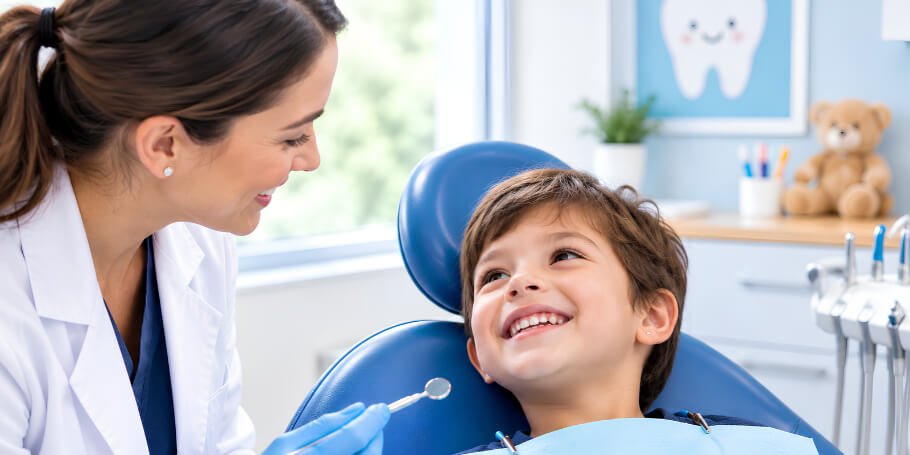
Visits are designed to be short, calm and friendly, especially for younger children. The dental team explains each step in simple words so nothing feels like a surprise. Parents are welcome to stay close so younger children feel reassured.
A visit may include:
- A gentle exam of teeth, gums and jaw.
- A cleaning to remove plaque and buildup.
- A review of brushing and flossing habits.
- Fluoride treatment when recommended.
When children feel safe and in control, they are more likely to cooperate and to look forward to future appointments.
Dental Care at Every Stage of Childhood
Needs change quickly as children grow. Understanding what matters at each stage helps parents know what to watch for.
Babies and Toddlers
The first years focus on protecting new teeth and building simple routines. Guidance may include:
- Wiping gums and cleaning first teeth gently.
- Advice on bottle and nighttime feeding habits.
- Tips for pacifier and thumb sucking habits.
School Age Children
As baby teeth loosen and permanent teeth arrive, protection and monitoring become more important. Care may include:
- Sealants on new permanent molars.
- Monitoring loose teeth and incoming permanent teeth.
- Coaching on brushing technique and flossing.
Teenagers
Teens have busier schedules, more independence and different risks. Visits may include:
- Care around braces or aligners.
- Mouthguards for sports.
- Guidance on diet, drinks and wisdom teeth monitoring.
Why Does Infant Care Begin Before the First Tooth?
Good infant oral care Burleson parents can start at home begins long before the first tooth appears. Wiping the gums with a clean, damp cloth after feedings removes milk residue and helps babies get used to mouth care. Once teeth appear, a soft brush and a tiny smear of fluoride toothpaste are enough. A first dental visit around the first birthday lets the dentist check development and answer your questions.
How Do Sealants and Fluoride Protect Growing Teeth?
The chewing surfaces of molars have deep grooves where food and bacteria can collect, and a toothbrush does not always reach them. Sealants are thin protective coatings placed on these surfaces to help keep decay from starting. Fluoride, applied in the office or found in toothpaste, helps strengthen enamel so teeth can better resist acid from food and drinks. Your dentist can explain whether either option suits your child based on age, habits and cavity risk.
When Should Orthodontic Concerns Be Evaluated?
Many parents wonder whether crooked teeth or a bite problem needs attention now or can wait. An early evaluation does not always mean treatment will begin right away. It simply gives the dentist a clear picture of how your child’s teeth and jaws are developing.
Signs worth mentioning to your dentist include:
- Crowded or overlapping teeth.
- Unusually wide gaps between teeth.
- Difficulty chewing or biting.
- Teeth that meet unevenly.
How Can Parents Support Healthy Habits at Home?
What happens between visits has a big effect on your child’s oral health.
Helpful habits include:
- Brushing twice daily with a fluoride toothpaste in the right amount for their age.
- Helping young children brush until they can do it well alone.
- Cleaning between teeth once they touch.
- Limiting sugary snacks and sipping drinks throughout the day.
Children learn by watching, so brushing together as a family makes the routine more fun and more consistent.
What Should You Ask Your Child’s Dentist?
Before or during a visit, questions help you understand your child’s needs and plan ahead.
You may want to ask:
- How often should my child visit?
- Is my child at risk for cavities?
- Would sealants or fluoride help?
- Should an orthodontic evaluation be considered?
- What should we do if a tooth is knocked out or chipped?
Open conversation helps parents feel prepared and helps children feel supported.
Frequently Asked Questions
1. How can I help my child feel less nervous about visiting the dentist?
Talk about the visit in a positive, simple way, avoid words that sound scary and let your child know what to expect. A friendly, patient team makes a big difference.
2. What are dental sealants and does my child need them?
Sealants are thin coatings placed on the chewing surfaces of back teeth to help protect them from decay. Your dentist can recommend them when they fit your child’s needs.
3. Are baby teeth really that important if they fall out?
Yes. Baby teeth support chewing, speech and the position of permanent teeth, so keeping them healthy matters.
4. What can I do about thumb sucking or a pacifier habit?
Many children outgrow these habits, but if they continue as permanent teeth arrive, your dentist can suggest gentle ways to help.
5. Why are professional cleanings important for children?
Professional cleanings remove plaque and tartar that brushing misses. Scheduling children’s dental cleanings Burleson parents can rely on also lets the dentist spot early concerns and helps kids get comfortable with the office.
Healthy smiles in childhood grow from gentle visits, consistent habits and guidance that adapts as your child grows. By understanding what each stage involves, parents can feel more prepared and children can feel more at ease. A visit to Burleson Family Dental and Orthodontics can help parents in Burleson, TX who are looking for a kids’ preventive dentist Burleson, tx families rely on, with personalized care for every stage of childhood.