info@burlesonfamilydental.com
 (817) 547 0597
What Are Your Options for Replacing Missing Teeth?
Quick Answer
Replacing missing teeth can help restore chewing ability, speech, and confidence while supporting better oral function.
- Different replacement options are available depending on the number of missing teeth.
- Treatment planning considers gum health, jawbone condition, and overall dental needs.
- Fixed and removable restorations offer different levels of stability and maintenance.
- A single missing tooth may be treated differently from extensive tooth loss.
- Regular dental care helps maintain the health and function of the replacement.
Losing a tooth can change more than the appearance of your smile. It may affect how you chew, the way your teeth meet, and your comfort during everyday activities. Some people notice these changes immediately, while others gradually adapt to the gap and only seek treatment when surrounding teeth begin to shift or chewing becomes difficult.
When considering tooth replacement options, it is important to look beyond the visible space. The right solution depends on how many teeth are missing, where they are located, the condition of the gums and jawbone, and whether the replacement needs to be fixed or removable. A carefully planned restoration can help bring balance back to your bite while supporting a more complete smile.
Why Replacing a Missing Tooth Matters
A missing tooth can leave neighboring teeth without the support they previously received. Over time, nearby teeth may begin to move toward the empty space, which can affect alignment and make cleaning more difficult.
Tooth loss may also influence:
- Chewing efficiency.
- Speech and pronunciation.
- Bite balance.
- Facial appearance.
- Confidence when smiling.
- The ability to maintain surrounding oral health.
Replacing a tooth does not always require the same approach for every patient. A single missing tooth, several adjacent teeth, and a full arch of missing teeth each require different considerations.
What Factors Influence Your Treatment Choice?
Before recommending a restoration, your dentist will evaluate the overall condition of your mouth. The goal is to select an option that is appropriate for your oral health, functional needs, and long-term maintenance.
Important considerations may include:
- The number of missing teeth.
- The location of the gaps.
- Gum health and signs of periodontal disease.
- Available jawbone support.
- The condition of neighboring teeth.
- Your bite and chewing pattern.
- Your preference for fixed or removable treatment.
- Your ability to maintain regular dental care.
A detailed evaluation helps ensure that the selected restoration is not simply filling a gap but also supporting the surrounding structures.
Exploring Common Tooth Replacement Solutions
Different restorations are designed for different patterns of tooth loss. Understanding the basic choices can make a consultation more productive.
Dental Bridges
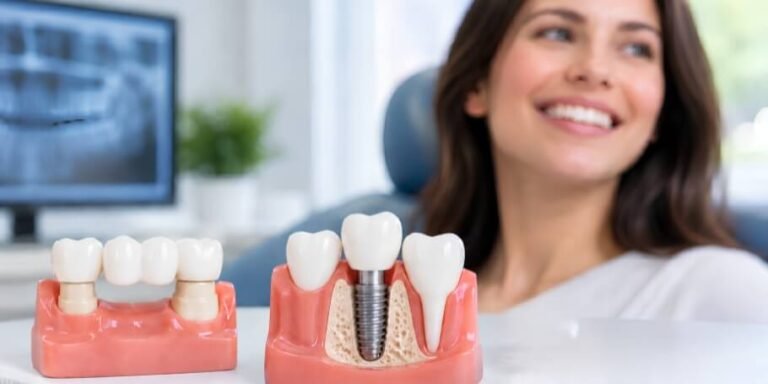
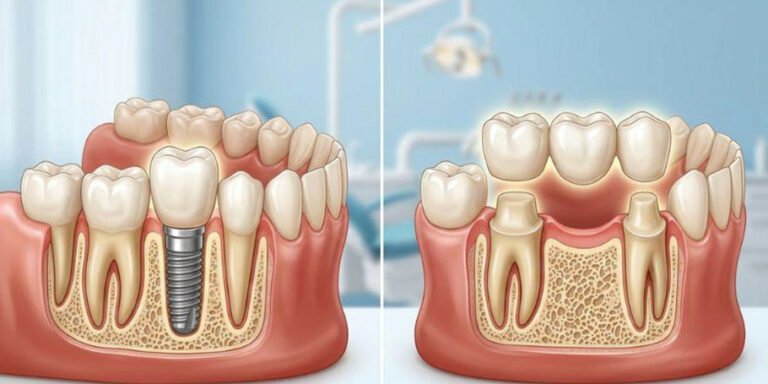
A dental bridge can replace one or more missing teeth by using neighboring teeth or other planned support to hold the restoration in place. It may be considered when the surrounding teeth are suitable for supporting the bridge.
Bridges can help:
- Restore chewing function.
- Fill a visible gap.
- Improve the continuity of the dental arch.
- Prevent neighboring teeth from drifting into the space.
Removable Partial Dentures
A partial denture can replace several missing teeth and may be removed for cleaning. It can be a practical option for patients who need to restore multiple areas of tooth loss without undergoing implant surgery.
The design depends on the location of the missing teeth and the available support from the remaining teeth.
Implant-Supported Restorations
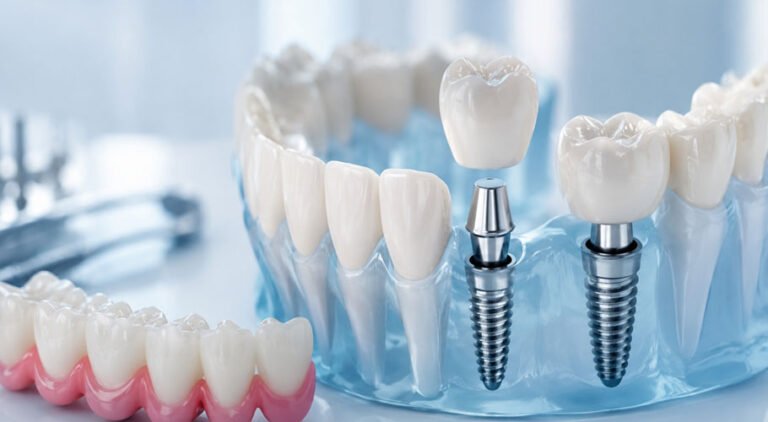
Implant-supported restorations use dental implants as a foundation for a replacement tooth, bridge, or denture. Rather than relying entirely on neighboring teeth or gum tissue, the restoration receives support from implants positioned within the jawbone.
This approach may be considered when patients are looking for:
- A more stable replacement.
- Support for a fixed restoration.
- Replacement of several missing teeth.
- A solution that does not depend entirely on adjacent teeth.
The suitability of this option depends on bone availability, gum health, and the overall treatment plan.
When Is a Single Tooth Implant Considered?
A single-tooth dental implant may be considered when one tooth is missing and the surrounding teeth are healthy enough to remain independent. Unlike a traditional bridge, an individual implant does not generally require neighboring teeth to be prepared as anchors.
The treatment typically involves:
- Evaluating the missing-tooth area.
- Assessing the jawbone and gum tissue.
- Placing the implant in the planned location.
- Allowing time for healing and integration.
- Attaching a custom-designed crown.
This type of restoration is planned to blend with the surrounding teeth in shape, size, and appearance. It can also help restore chewing function in the affected area.
What Happens During the Treatment Planning Stage?
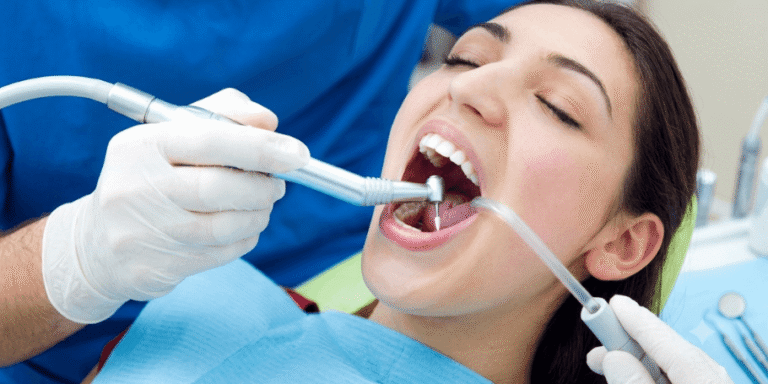
The planning stage is essential because tooth replacement involves more than selecting a restoration. Your dentist needs to understand the relationship between the missing tooth, neighboring teeth, gums, and bite.
The evaluation may involve:
- A clinical examination.
- Dental X-rays or other imaging.
- Assessment of bone support.
- Review of existing restorations.
- Examination of gum health.
- Discussion of your treatment goals.
If additional treatment is needed before replacement, such as addressing gum disease or improving bone support, that may become part of the overall plan.
Fixed vs. Removable Replacements
One of the main decisions in tooth replacement is whether the restoration should remain in place or be removed for cleaning.
Fixed restorations are designed to stay in position and may include:
- Dental bridges.
- Implant crowns.
- Implant-supported bridges.
- Implant-supported full-arch restorations.
Removable restorations can include:
- Partial dentures.
- Complete dentures.
- Certain removable implant-supported solutions.
The choice depends on your oral condition, the number of missing teeth, maintenance preferences, and the recommendation made after evaluation.
How Can You Maintain Your Replacement Teeth?
Replacing a missing tooth is only one part of maintaining oral health. The surrounding gums, remaining natural teeth, and restoration all require consistent care.
Helpful habits include:
- Brushing twice daily.
- Cleaning between teeth as recommended.
- Using appropriate cleaning tools around bridges or implants.
- Avoiding excessive pressure on the restoration.
- Attending routine dental examinations.
- Following professional maintenance recommendations.
- Reporting discomfort, looseness, or changes in the bite.
Even a well-planned restoration benefits from regular monitoring because oral conditions can change over time.
What Should You Discuss With Your Dentist?
Before beginning treatment, ask questions that help you understand the proposed solution and its maintenance requirements.
You may want to discuss:
- Which replacement option suits your missing teeth?
- Will the restoration be fixed or removable?
- Is additional treatment required before replacement?
- How long will the overall process take?
- What care will be needed afterward?
- What alternatives are available?
- How can the restoration be maintained long-term?
A clear discussion helps you understand the purpose of each stage and make an informed decision about your dental care.
Frequently Asked Questions
1. What is the best way to replace a missing tooth?
The appropriate option depends on the location of the missing tooth, gum health, bone support, and the condition of neighboring teeth.
2. Can one implant replace one missing tooth?
Yes. A single implant may support an individual crown when the patient is suitable for that treatment.
3. Are dental bridges and implants the same?
No. A bridge generally relies on supporting teeth or planned support, while an implant is positioned within the jawbone to support a restoration.
4. Can several missing teeth be replaced without placing an implant for every tooth?
In some cases, strategically placed implants can support a bridge or denture, depending on the treatment plan.
5. How long does a tooth replacement restoration last?
Longevity varies according to the type of restoration, oral hygiene, bite forces, lifestyle habits, and regular professional care.
Replacing missing teeth is an important step toward restoring comfortable function, maintaining oral balance, and protecting surrounding teeth. The most suitable solution depends on the number of missing teeth, jawbone health, and long-term dental goals. A detailed consultation at Burleson Family Dental and Orthodontics can help patients understand their options for dental implant dentists in Burleson, TX, services, and personalized tooth replacement care.