info@burlesonfamilydental.com
 (817) 547 0597
Restoring Function and Confidence: A Guide to Fixed Dental Bridges and Dental Implants
Quick Answer
A missing tooth can be replaced with different types of restorations, depending on your oral health and treatment goals.
- A dental implant can support a single tooth or multiple teeth within the jaw.
- A fixed dental bridge uses neighboring teeth for support.
- Treatment begins with an evaluation of your teeth, gums, and bite.
- Healing and adjustment time can vary depending on the restoration chosen.
- Long-term success depends on daily hygiene and regular dental visits.
A missing tooth does more than change the way your smile looks. It can affect how you chew, place added pressure on neighboring teeth, and allow surrounding teeth to shift out of position over time. Addressing the gap sooner can help prevent these changes from becoming more involved to manage.
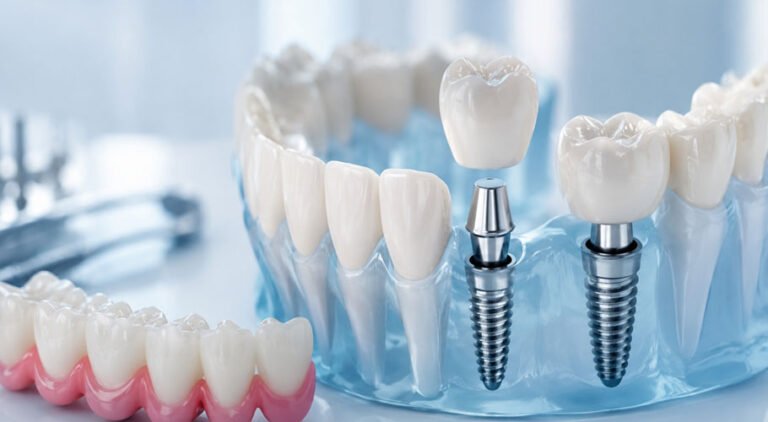
A dental implant is one way to replace a missing tooth from the root upward, providing a foundation within the jaw for a new restoration. For some patients, a different option, such as a bridge supported by adjacent teeth, may be considered instead. The right choice depends on the number of missing teeth, the condition of the surrounding teeth, and the patient’s overall oral health.
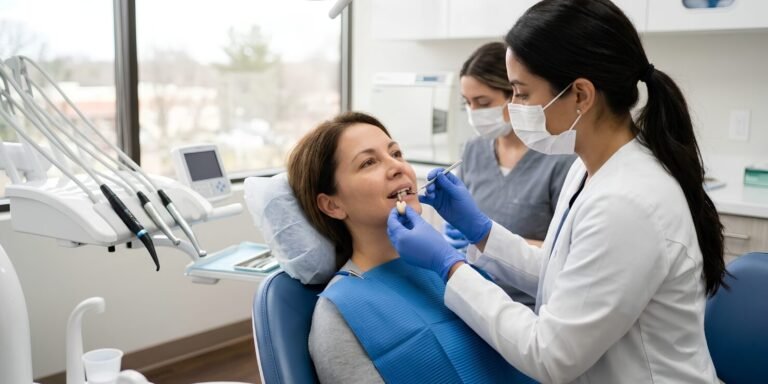
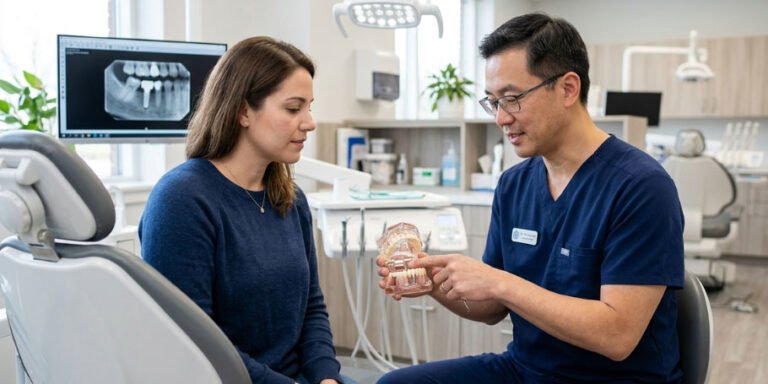
A dental examination is the first step in determining which restoration may be the best fit for your smile.
What Makes a Fixed Restoration Different?
Removable appliances rest on the gums and can be taken out for cleaning. A fixed restoration, by contrast, remains in place and functions more like natural teeth.
A fixed restoration typically involves:
- Support Structure: Either an implant or the neighboring natural teeth.
- Connector: The framework that holds the replacement tooth in place.
- Restoration: The visible replacement tooth or teeth, shaped to match the surrounding smile.
Because a fixed restoration is not removed daily, it is generally cared for in much the same way as natural teeth.
Which Restoration Option May Be Right for You?
The number of missing teeth and the condition of the surrounding teeth and jawbone play a role in choosing the right approach.
Fixed Dental Bridge
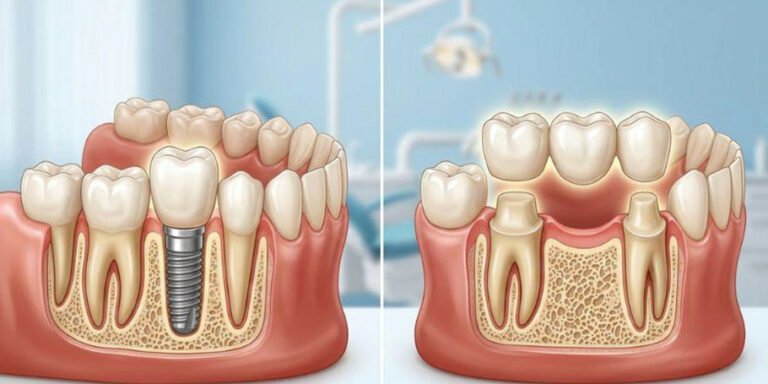
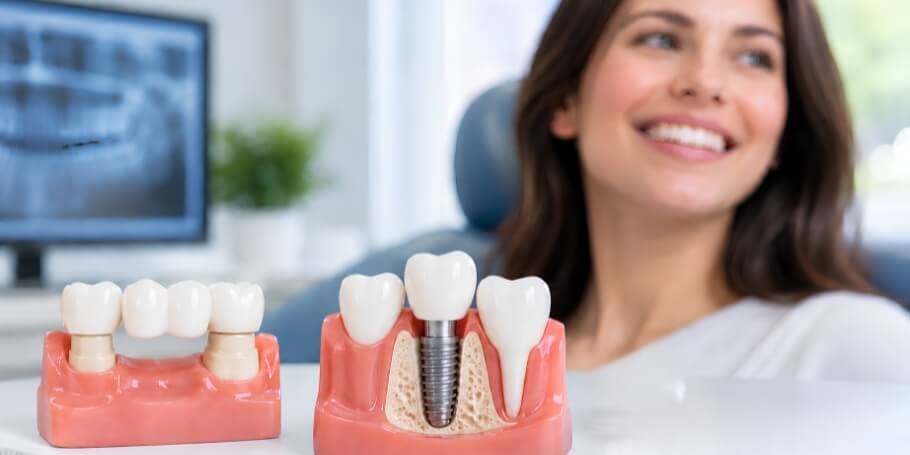
A fixed dental bridge replaces one or more missing teeth by anchoring a replacement tooth to the teeth on either side of the gap. The adjacent teeth are prepared to support the bridge, which is then cemented into place.
This option may be considered for patients who want to:
- Replace a missing tooth without surgery.
- Restore chewing function in the affected area.
- Use a fixed, non-removable restoration.
- Complete treatment in a shorter overall timeline.
Single-Tooth Implant
For patients who prefer not to involve neighboring healthy teeth, a single implant and crown can replace one missing tooth independently.
Implant-Supported Bridge
When several teeth in a row are missing, an implant-supported bridge can provide a fixed restoration without needing an implant beneath every missing tooth.
Full Mouth Restoration
Patients with extensive tooth loss may need a more comprehensive restoration involving multiple implants or a combination of restorative approaches.
What Happens Before Treatment?
A thorough dental examination helps your dentist understand the condition of your mouth before recommending a treatment path.
Your evaluation may include:
- Examination of your teeth and gums.
- Assessment of your bite.
- Dental imaging.
- Evaluation of the health of neighboring teeth or the jawbone.
- Discussion of your treatment goals and daily habits.
This information helps determine whether a bridge, an implant, or another restoration may be the most appropriate option.
The Treatment Process
While every patient’s plan is different, restorative treatment generally follows a similar sequence.
Treatment Planning
Your dentist develops a plan based on the location of the missing tooth or teeth and the condition of the surrounding structures.
Preparation
For a bridge, the neighboring teeth are prepared to support the restoration. For an implant, the post is placed within the jawbone.
Healing or Fitting
An implant requires a healing period to integrate with the bone, while a bridge may be fitted more quickly once the supporting teeth are prepared.
Placing the Final Restoration
The finished restoration is placed and adjusted to fit comfortably and function naturally alongside the rest of the smile.
What Are the Benefits of a Fixed Restoration?
A fixed restoration can offer benefits beyond simply closing a gap in the smile.
Potential advantages include:
- Improved chewing function.
- A stable restoration that does not need to be removed.
- Support for neighboring teeth, helping prevent shifting.
- A more complete-looking smile.
- Improved confidence when speaking or smiling.
The specific benefits can vary depending on whether a bridge or an implant-based restoration is chosen.
How Should You Care for a Fixed Restoration?
Consistent oral hygiene remains important, regardless of the type of restoration placed.
A good daily routine includes:
- Brushing twice a day.
- Cleaning under and around the restoration as recommended.
- Using any specialized tools suggested by your dentist.
- Keeping regular dental appointments.
- Avoiding habits that could damage the restoration.
Is a Fixed Restoration Suitable for Everyone?
Suitability depends on several individual factors rather than the presence of a missing tooth alone.
Your dentist will consider:
- The health of neighboring teeth.
- Jawbone condition, if an implant is being considered.
- Gum health.
- Number and location of missing teeth.
- Ability to maintain regular dental care.
If additional treatment is needed before placing a bridge or implant, your dentist can explain how it fits into your overall plan.
Fixed Dental Bridge vs. Dental Implant
Both options can replace a missing tooth, but they work differently.
Fixed Dental Bridge
- Relies on neighboring teeth for support.
- Does not require surgery.
- May involve a shorter overall timeline.
- Neighboring teeth must be prepared for the restoration.
Dental Implant
- Supported independently within the jawbone.
- Requires surgical placement.
- Does not rely on neighboring teeth.
- May involve a longer healing period.
A dental examination can help you compare these options based on your specific needs.
What Can You Expect During Recovery?
Recovery depends on the type of restoration and the extent of treatment involved.
Your dentist may advise you to:
- Follow post-treatment instructions carefully.
- Choose appropriate foods while adjusting to the new restoration.
- Keep the treatment area clean as directed.
- Attend all follow-up appointments.
- Contact your dental office with any unexpected or persistent symptoms.
Frequently Asked Questions
1. How long does a fixed dental bridge last?
With proper care and regular checkups, a fixed bridge can last for many years, though its lifespan can vary by patient.
2. Is a dental implant a better option than a bridge?
Neither option is universally better. The right choice depends on the condition of neighboring teeth, jawbone health, and personal treatment goals.
3. Does getting a bridge require surgery?
No. A fixed bridge is placed by preparing the neighboring teeth rather than through a surgical procedure.
4. How do I know which restoration is right for me?
A dental examination allows your dentist to evaluate your teeth, gums, and jawbone before recommending the most suitable option.
5. Can a bridge or implant look natural?
Yes. Both restorations can be customized in shape, size, and colour to blend with your surrounding teeth.
Replacing a missing tooth involves more than closing a visible gap. The right restoration can help restore comfortable chewing, protect neighbouring teeth from shifting, and support a smile you feel confident sharing. A dental examination is the best starting point for understanding which option, whether a bridge or an implant, fits your needs.
If you are looking for family dentistry in Burleson, TX, Burleson Family Dental and Orthodontics offers restorative treatment alongside preventive care and orthodontics, allowing patients to address every stage of their oral health in one practice.