info@burlesonfamilydental.com
 (817) 547 0597
Full Mouth & Single Tooth Dental Implants: Types, Benefits, Process & What to Expect
Quick Answer
Dental implants replace missing teeth with a permanent, natural-looking solution that restores function and confidence.
- Dental implants replace a missing tooth from the root up, not just the crown.
- Treatment can range from a single implant to a full arch of replacement teeth.
- The process involves an evaluation, placement, healing, and a final restoration.
- Implants can benefit both younger and older adults who qualify.
- Long-term success depends on proper care and regular dental visits.
Losing one or more teeth can affect more than your smile. It can change how you chew, speak, and feel in everyday situations. For patients missing several teeth or an entire arch, full-mouth dental implants offer a way to restore a complete, functional smile without relying on removable dentures. Rather than simply covering up tooth loss, implant-based treatment rebuilds the foundation so the results feel stable and natural.
What Are Dental Implants?
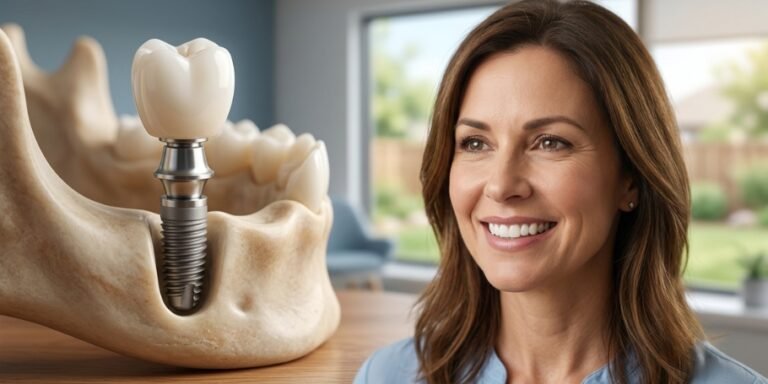
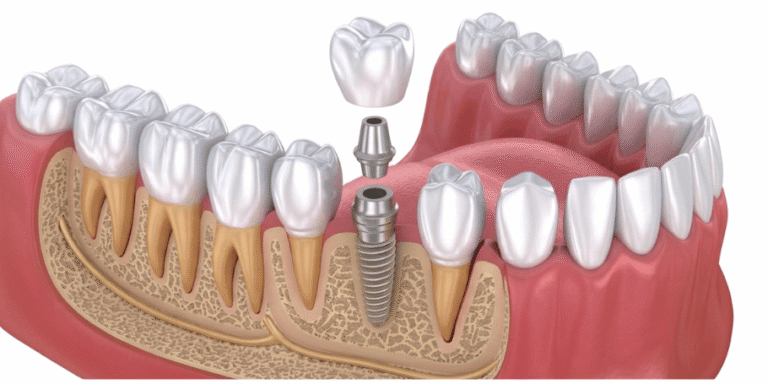
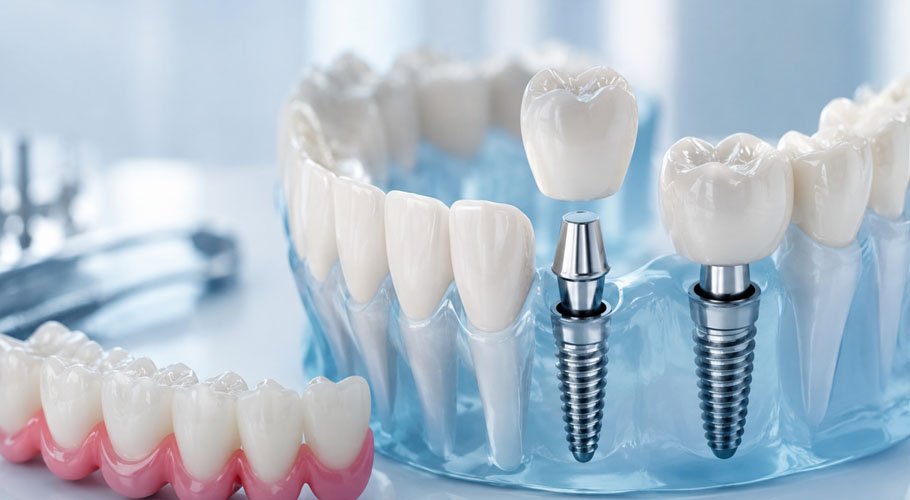
Dental implants are small titanium posts placed into the jawbone to act as an artificial tooth root. Once the implant fuses with the bone, a custom crown, bridge, or denture is attached on top to complete the restoration.
Unlike a bridge, which relies on neighboring teeth for support, an implant stands on its own, preserving the surrounding natural teeth and supporting the jawbone where a tooth is missing.
Implant treatment may be recommended for patients missing a single tooth, several teeth in a row, or all of the teeth in an arch. A thorough evaluation helps determine which type of implant treatment is appropriate and whether the jawbone can support it.
Common Dental Implant Options
Different implant solutions are available depending on how many teeth need to be replaced and the condition of the jawbone.
Single Tooth Implant
A single tooth implant replaces one missing tooth with an individual titanium post and crown, without altering the neighboring teeth.
Implant-Supported Bridge
When several teeth in a row are missing, a bridge anchored to two or more implants replaces them, removing the need to grind down adjacent teeth.
Implant-Supported Dentures
For patients missing most or all of their teeth, implant-supported dentures attach securely to a series of implants, offering more stability than traditional removable dentures.
Full Mouth Reconstruction
This option replaces an entire arch, or both arches, of teeth using strategically placed implants, giving patients a fixed, long-term solution rather than a removable appliance.
Who May Benefit From Dental Implants?
Dental implants are not limited to a specific age group. Many adults missing one or more teeth may be candidates, as long as they have adequate bone density and healthy gums.
You may benefit from an implant evaluation if you experience:
- One or more missing teeth.
- Discomfort with a current denture or bridge.
- Difficulty chewing certain foods.
- Self-consciousness about gaps in your smile.
An experienced dental team can review your oral health history and determine whether implants are a suitable option. Choosing between a single implant, a supported bridge, or a full arch approach depends on the extent of tooth loss and the strength of the jawbone. Dental implants are versatile enough to address nearly every stage of tooth loss, which is part of why they have become a preferred long-term solution for so many patients.
How Does Dental Implant Treatment Work?
Placing dental implants is a multi-step process that unfolds over several months, allowing time for proper healing at each stage.
Initial Evaluation
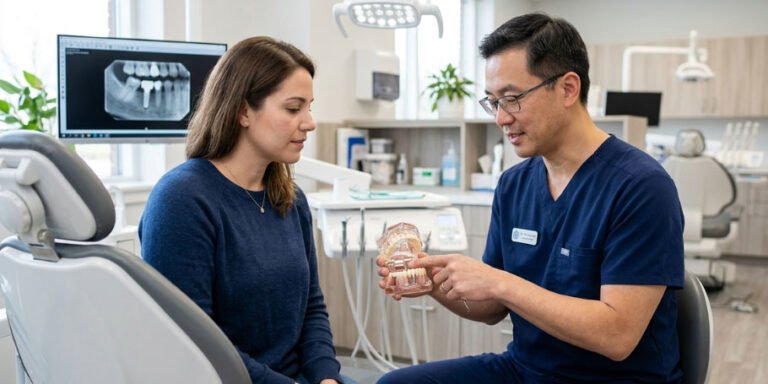
The process begins with a review of the teeth, gums, and jawbone. Your dental team may take x-rays or digital scans to assess bone density and plan implant placement precisely.
Creating a Treatment Plan
Based on the findings, the dental team develops a personalized plan outlining the number of implants needed, the type of restoration, and the expected timeline.
Implant Placement
The implant post is surgically placed into the jawbone. Over the following weeks, the bone fuses with the implant in a process known as osseointegration, creating a stable foundation.
Final Restoration
Once healing is complete, a custom crown, bridge, or denture is attached to the implant, designed to blend naturally with your existing smile.
Benefits of Dental Implants
Choosing dental implants can offer several functional and cosmetic advantages.
Potential benefits include:
- A natural-looking, permanent replacement for missing teeth.
- Improved ability to chew and speak.
- Preservation of jawbone density.
- No impact on neighboring teeth.
- Long-term durability with proper care.
The benefits you experience will depend on the number of teeth being replaced and your overall oral health.
How Long Does Dental Implant Treatment Take?
There is no single timeline that applies to every patient. Duration depends on the number of implants needed, whether bone grafting is required, and how quickly the jawbone heals.
Some patients complete treatment within a few months, while more complex cases, such as full arch restoration, need additional time for proper healing. Your dental team can provide a more specific estimate after your consultation.
Dental Implants vs. Traditional Dentures
Patients often compare implants with traditional dentures before deciding on treatment.
Dental Implants
- Fixed in place, not removable.
- Preserve jawbone density.
- Function like natural teeth.
- Require a surgical placement process.
Traditional Dentures
- Removable.
- May require adhesives for stability.
- Can shift or feel loose over time.
- Non-surgical option.
The right choice depends on your oral health, bone density, and personal preferences. Your dental professional can help you decide which fits your needs.
Is Dental Implant Treatment Painful?
Most patients report only mild discomfort during healing rather than significant pain. Local anesthesia is used during placement, and any post-procedure soreness is generally manageable with recommended care. This discomfort typically fades within a few days as the surgical site heals. If you experience ongoing pain, swelling, or signs of infection, contact your dental office promptly.
Frequently Asked Questions
1. Am I a good candidate for dental implants?
Most healthy adults with sufficient jawbone density are candidates. Your dental team can confirm eligibility during a consultation.
2. How long do dental implants last?
With proper care and regular checkups, implants can last for many years and often a lifetime.
3. Is bone grafting always necessary?
Not always. It is only recommended when there is insufficient bone to support the implant.
4. Can implants replace all my teeth?
Yes. Full-mouth options can replace an entire arch using a series of implants for support.
5. How do I care for dental implants?
Brush and floss implants like natural teeth, and keep up with regular dental visits.
Whether you are missing one tooth or need a full arch replacement, the first step starts with a thorough dental examination. This evaluation lets your dental team assess your oral health and design a plan suited to your needs.
Dental implants offer a reliable way to restore your smile’s function and appearance for years to come. If you are ready to explore whether implants are right for you, our team provides comprehensive family dentistry in Burleson, TX, guiding patients through every step from consultation to long-term care.