info@burlesonfamilydental.com
 (817) 547 0597
When Does Your Child or Teen Need Orthodontic Treatment?
Quick Answer
Crooked teeth, crowded teeth, gaps, and bite problems are common reasons children and teenagers may need orthodontic treatment. Some alignment concerns are easy to notice, while others develop gradually as permanent teeth come in. Early evaluation can help identify problems with tooth position, jaw growth, or the way the upper and lower teeth meet. Depending on the child’s age and dental needs, treatment may involve monitoring, braces, clear aligners, or other orthodontic options. A professional evaluation is the best way to understand whether treatment is needed and when it should begin.
Key Points
- Crowded, crooked, or widely spaced teeth can indicate an orthodontic concern.
- Overbites, underbites, and crossbites may affect how the teeth function.
- Early evaluation can identify developing alignment or bite problems.
- Braces and clear aligners may be suitable depending on the individual case.
- Good oral hygiene becomes especially important during orthodontic care.
- Retainers help maintain tooth alignment after active treatment.
Why Tooth Alignment Matters During Childhood
A child’s smile changes significantly as baby teeth are replaced by permanent teeth. During this period, the position of the teeth and the development of the jaws can influence how the bite comes together. Some children naturally develop straight teeth, while others may experience crowding, spacing, or bite irregularities.
Parents may notice that permanent teeth are growing in at unusual angles or that some teeth overlap others. In other cases, the concern may be less visible, such as difficulty biting food comfortably or an uneven relationship between the upper and lower teeth.
Waiting until all permanent teeth have erupted is not always necessary. An orthodontic evaluation can help determine whether immediate treatment is appropriate or whether the child’s development should simply be monitored.
Signs Your Child May Need Orthodontic Care
Orthodontic problems can appear in different ways. Some are obvious when a child smiles, while others become noticeable during eating, brushing, or speaking.
Common signs include:
- Teeth that overlap or appear crowded
- Large gaps between teeth
- Teeth that stick out noticeably
- Difficulty biting or chewing food
- An overbite or underbite
- A crossbite where upper and lower teeth do not line up properly
- Teeth that do not meet evenly
- Frequent jaw clicking or discomfort
- Uneven tooth wear
- Difficulty cleaning between crowded teeth
- Permanent teeth coming in behind or in front of baby teeth
One sign does not automatically mean a child needs braces. The severity of the problem, dental development, jaw growth, and overall oral health all need to be considered before a treatment plan is recommended.
What Happens During an Orthodontic Evaluation?
The first appointment is designed to understand how the teeth and bite are developing. The dental provider examines the teeth, evaluates the way the jaws relate to one another, and discusses any concerns the parent or child may have.
The evaluation may include:
- Examination of tooth alignment
- Bite assessment
- Dental photographs
- Digital scans or impressions when appropriate
- X-rays when clinically necessary
- Review of oral health and dental history
The goal is not simply to make the teeth look straighter. A well-planned treatment should also support a balanced bite, comfortable chewing, easier cleaning, and stable tooth positioning.
Family Orthodontics: Care for Different Ages
Orthodontic needs are not limited to teenagers. Children may require early evaluation because their teeth and jaws are still developing, while teenagers often begin treatment once enough permanent teeth have erupted. Adults can also benefit from orthodontic care when they want to improve tooth alignment or address bite concerns.
This is where family orthodontics can be especially convenient. Having orthodontic care available for different members of the household can make appointments easier to manage and help families maintain continuity of care.
Treatment recommendations will still differ from person to person. A younger child may need monitoring or early intervention, while a teenager may be ready for braces or clear aligners. Adults may require additional consideration if they have fillings, crowns, gum concerns, or previous orthodontic treatment.
Orthodontic Treatment Options
After the evaluation, the dental provider can recommend an option based on the patient’s dental condition, age, lifestyle, and treatment goals.
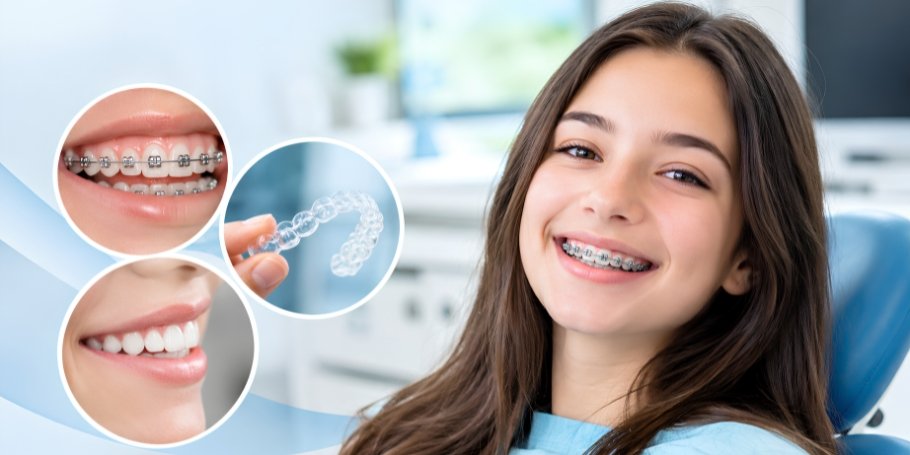
Traditional Braces
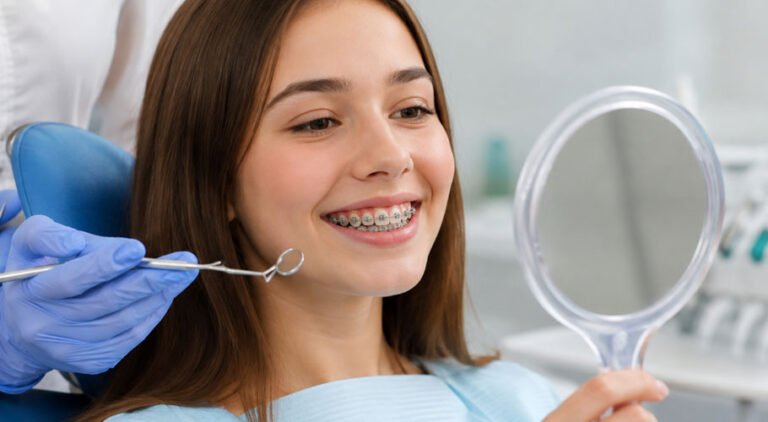
Traditional braces use brackets and wires to apply controlled pressure to the teeth. They can be used for a wide range of alignment and bite concerns and are a common option for children, teenagers, and adults.
Braces may be considered for:
- Crowded teeth
- Significant spacing
- Crooked teeth
- Complex tooth movement
- Certain bite problems
Because braces remain attached during treatment, patients need to pay close attention to brushing and flossing around brackets and wires.
Clear Aligners
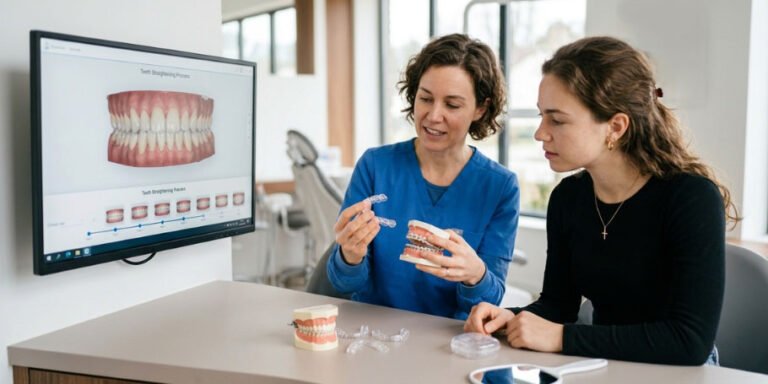
Clear aligners use a series of removable trays to gradually move teeth toward their planned positions. They are designed to be less noticeable than traditional braces and can be removed for eating and routine oral hygiene.
They may be suitable for certain mild to moderate alignment concerns. However, they are not the right choice for every patient. Consistent wear and proper care are important for achieving the planned result.
Early Orthodontic Care
Some children benefit from evaluation before their teenage years. Early care may help identify developing jaw or bite concerns and determine whether intervention is needed.
In some cases, early treatment can help guide dental development, create space for permanent teeth, or reduce the complexity of future treatment. In others, the best approach may simply be to monitor growth until the appropriate time for active treatment.
Caring for Teeth During Orthodontic Treatment
Good oral hygiene is essential while teeth are being moved. Brackets, wires, and other appliances can create additional areas where food particles and plaque collect.
Children and teens should:
- Brush carefully around brackets and wires
- Floss regularly using appropriate orthodontic cleaning tools
- Avoid very hard or sticky foods that can damage appliances
- Follow instructions for aligner wear and cleaning
- Attend scheduled orthodontic appointments
- Report loose brackets, broken wires, or damaged aligners
- Continue regular dental checkups during orthodontic care
These habits help protect the teeth and gums throughout treatment.
Why Retainers Matter After Treatment
Orthodontic care does not end when the teeth reach their planned positions. Teeth can naturally shift over time, particularly during the period immediately following active treatment.
A retainer helps hold the teeth in their new positions. Depending on the individual case, a patient may receive a removable retainer, a fixed retainer, or a combination of both.
Following the recommended retainer schedule is important for maintaining the results and reducing the chance that teeth will gradually move out of alignment.
Frequently Asked Questions
1. At what age should a child have an orthodontic evaluation?
An evaluation can be useful when concerns about tooth alignment or jaw development become noticeable. A dental professional can determine whether treatment is needed immediately or whether growth should be monitored.
2. Does every child with crooked teeth need braces?
No. Minor alignment issues may not require treatment, while more significant crowding or bite problems may benefit from orthodontic care. An individual assessment is necessary.
3. Are braces painful?
Some pressure or mild soreness can occur after braces are placed or adjusted. This discomfort is usually temporary as the mouth becomes accustomed to the appliance.
4. Can teenagers use clear aligners?
Some teenagers may be suitable candidates for clear aligners. Suitability depends on the type and severity of the alignment problem and the patient’s ability to follow wear instructions.
5. How long does orthodontic treatment take?
Treatment time varies according to the complexity of the case, the appliance used, tooth movement required, and how consistently the patient follows care instructions. Your provider can give a more individualized estimate after an evaluation.
6. Will my child need a retainer after braces?
In most cases, some form of retention is recommended after active orthodontic treatment. Retainers help maintain the position of the teeth and protect the results achieved during treatment.
Recognizing alignment problems early can make it easier to understand what your child needs and when treatment should begin. Whether the concern involves crowding, spacing, or a bite problem, Braces treatment and other orthodontic options can be considered after a professional evaluation. The right approach depends on the child’s age, dental development, oral health, and individual treatment goals.
If you are looking for orthodontic burleson tx care for your child, teen, or yourself, Burleson Family Dental & Orthodontics offers personalized orthodontic care for patients at different stages of life. Schedule an orthodontic consultation to discuss your concerns and find an approach suited to your smile.