info@burlesonfamilydental.com
 (817) 547 0597

Which Orthodontic Option Is Right for Teens and Adults?
Quick Answer
- Braces and aligners can straighten teeth for children, teens and adults.
- The best option depends on the alignment concern, your lifestyle and daily habits.
- Teens and adults have different needs, from jaw growth to gum health.
- A consultation includes an exam and imaging to plan treatment.
- Following wear instructions and attending visits keeps treatment on track.
Choosing an orthodontist Burleson patients can rely on is the first step toward a straighter, healthier smile. Crowded teeth, gaps and bite problems are more than cosmetic concerns. They can affect how you chew, how easily you clean your teeth and how you feel about your smile. The right plan starts with understanding what is causing the problem and which type of treatment suits you best.
Orthodontic care is not one size fits all. A teenager whose jaws are still growing has different needs from an adult with older dental work, and each option comes with its own daily routine. Knowing what to expect makes it easier to choose with confidence.
Why Straightening Your Teeth Matters
Teeth that are crowded, spaced or misaligned can be harder to keep clean and may wear unevenly over time. Correcting alignment can support both the look and the function of your smile.
Straighter teeth may help with:
- Cleaning between teeth more easily.
- Balancing the bite.
- Reducing uneven wear on tooth surfaces.
- Chewing more comfortably.
- Supporting healthier gums.
- Feeling more confident when you smile.
What Factors Influence Your Treatment Choice?
Before recommending braces or aligners, your orthodontist evaluates your teeth, gums, jaws and bite. The aim is to find an option that fits your needs and your daily life.
Important considerations may include:
- The type and severity of the alignment concern.
- Your age and stage of jaw growth.
- The health of your teeth and gums.
- Existing fillings, crowns or other dental work.
- Your lifestyle, including sports or musical instruments.
- Your ability to follow wear and care instructions.
- Your personal goals for the final result.
A thorough evaluation helps ensure the plan addresses the cause of the problem and not only the appearance.
Exploring Braces and Aligner Options
Different appliances work in different ways. Understanding the basics helps you ask better questions during a consultation.
Metal Braces
Metal braces use brackets and wires to guide teeth into position. They are durable and can address a wide range of alignment and bite concerns, including more complex cases. Colored bands let younger patients personalize their smile.
Ceramic Braces
Ceramic braces work like metal braces but use tooth colored brackets that blend in more with the teeth. They may appeal to patients who want a less noticeable fixed option.
Aligner Treatment
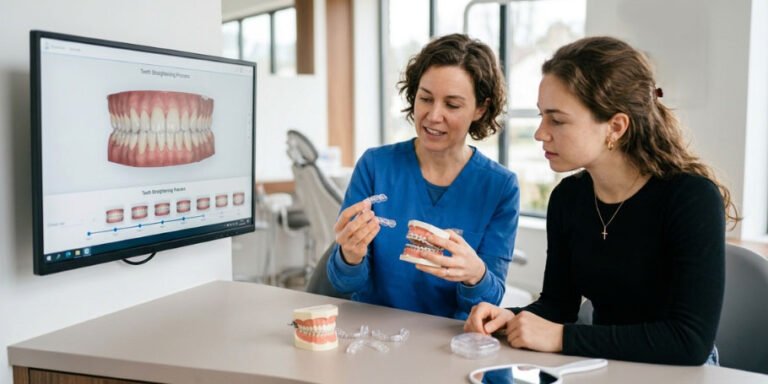
Aligners are removable, custom made trays that move teeth in small steps. They are often considered for mild to moderate alignment concerns and for patients who prefer a nearly invisible option.
How Does Treatment Differ for Teens?
Teenagers are still growing, which can be an advantage because the jaws and teeth respond to guidance during these years. At the same time, busy schedules and sports bring their own challenges.
Points that matter for teens include:
- Keeping braces and teeth clean around brackets.
- Wearing a mouthguard during sports.
- Following instructions for rubber bands or aligner wear.
- Avoiding sticky or very hard foods.
- Keeping every scheduled visit.
Parents play an important role by encouraging good habits and helping teens stay consistent.
Are Aligners an Option for Teens and Adults?
Patients searching for Invisalign Burleson of any age often want a discreet way to straighten their teeth without brackets and wires. Aligners are removed for eating and cleaning, which can make daily routines feel simpler, but they only work when worn as directed for most of the day. Your orthodontist reviews your bite, the amount of movement needed and your habits to decide whether aligners can deliver the result you want or whether braces may be the better choice.
What Should Adults Know Before Starting?
Adults can benefit from orthodontic care just as much as younger patients. Because the jaws have finished growing, treatment is planned with different considerations in mind.
Helpful things for adults to consider include:
- The health of your gums and supporting bone.
- Existing crowns, bridges or implants.
- Whether other dental care should be completed first.
- How treatment fits around work and social life.
A careful evaluation helps ensure your teeth, gums and bite are ready for movement.
What Happens During an Orthodontic Consultation?
A first visit is about listening, examining and explaining your options in simple terms.
The consultation may include:
- A review of your dental and medical history.
- An examination of your teeth, gums and bite.
- Dental imaging and records.
- A discussion of your goals and concerns.
- An explanation of recommended options and the expected steps.
How Can You Care for Your Teeth During Treatment?
Good habits protect your teeth and help treatment stay on schedule.
Helpful habits include:
- Brushing after meals and before bed.
- Cleaning between teeth with the tools your team recommends.
- Avoiding foods that can damage braces.
- Wearing aligners or elastics exactly as directed.
- Attending every adjustment visit.
- Calling the office if a wire or bracket becomes loose.
What Should You Discuss With Your Orthodontist?
Before beginning treatment, ask questions that help you understand the plan.
You may want to ask:
- Which option suits my teeth and lifestyle?
- How long is treatment expected to take?
- What will daily care involve?
- How often will I need visits?
- What happens after the braces or aligners come off?
Clear answers help you feel prepared and confident from the very first appointment.
Frequently Asked Questions
1. How long does treatment with braces or aligners usually take?
The length varies with the type of concern, the option chosen and how closely instructions are followed, so your orthodontist can give you a personal estimate after an evaluation.
2. Will braces or aligners be painful?
Many patients feel mild soreness after getting braces or changing aligners, and it usually eases within a few days.
3. Can I eat normally during treatment?
With braces, some hard and sticky foods should be avoided. With aligners, you remove them to eat, then clean your teeth before putting them back in.
4. What happens after braces or aligners are removed?
Teeth can shift over time, so your orthodontist will provide a retention plan and explain how and when to wear it.
5. Are braces only for teens?
No. Many adults also benefit from straighter teeth. Discussing adult braces Burleson TX options with your orthodontist helps you understand which approach suits your gum health, existing dental work and lifestyle.
Straightening your teeth supports comfort, function and confidence, and the right plan depends on your age, your goals and your oral health. By understanding the options, patients can approach treatment with clarity and realistic expectations. A consultation at Burleson Family Dental and Orthodontics can help families exploring teen braces in Burleson, TX, and personalized care for every age.