info@burlesonfamilydental.com
 (817) 547 0597
When Should Your Child Get an Orthodontic Evaluation? Early Signs Parents Should Know
Quick Answer
Orthodontic Treatment can help children address crooked teeth, crowded smiles, bite problems, and developing jaw concerns. An orthodontic evaluation during childhood allows the dentist to monitor how the teeth and jaws are developing and identify concerns that may need attention. While not every child requires braces at an early age, an assessment can help determine the right time for treatment. Parents should watch for signs such as difficulty chewing, crowded teeth, mouth breathing, and unusual bite patterns. Early evaluation can help create a treatment plan that supports healthy dental development.
Key Points
- Children can benefit from an orthodontic evaluation as their permanent teeth begin to develop.
- Crowded teeth, gaps, and bite problems may indicate a need for assessment.
- Early evaluations help monitor jaw growth and tooth alignment.
- Braces are one option for correcting certain alignment and bite concerns.
- Not every child needs immediate orthodontic treatment.
- Regular dental checkups help track changes in children’s dental development.
Why Is Orthodontic Evaluation Important for Children?
Children’s teeth and jaws go through several developmental changes as they grow. Baby teeth gradually fall out, permanent teeth begin to appear, and the jaw continues developing.
Sometimes, these changes can lead to alignment concerns. Permanent teeth may not have enough room to come in properly, or the upper and lower teeth may not fit together comfortably.
An orthodontic evaluation helps identify these concerns before they become more complicated. It also gives parents a better understanding of their child’s dental development.
Some common reasons a child may need an orthodontic assessment include:
- Crowded or overlapping teeth
- Noticeable gaps between teeth
- Upper teeth extending too far over lower teeth
- Lower teeth positioned ahead of upper teeth
- Difficulty biting or chewing food
- Teeth that do not meet properly
- Early or late loss of baby teeth
- Jaw shifting or clicking during movement
Identifying these signs does not automatically mean a child needs braces. A dental professional can evaluate the situation and recommend whether monitoring or treatment is appropriate.
At What Age Should Children Have an Orthodontic Evaluation?
Many dental professionals recommend an initial orthodontic screening around age seven. By this age, children generally have a combination of baby teeth and permanent teeth, making it easier to identify certain developing alignment and bite concerns.
However, this does not mean every child needs treatment at age seven. Some children may benefit from early intervention, while others may only need regular monitoring until more permanent teeth appear.
The ideal timing depends on jaw growth, tooth development, bite alignment, and individual dental needs.
Parents should continue scheduling routine dental visits so changes in their child’s smile can be monitored as they grow.
Common Signs Your Child May Need Orthodontic Care
Recognizing early warning signs can help parents decide when to schedule an evaluation.
Crowded or Overlapping Teeth
When teeth do not have enough space, they may grow at different angles or overlap. Crowding can make brushing and flossing more difficult because food particles and plaque may collect between closely positioned teeth.
Overbite or Underbite
An overbite occurs when the upper front teeth extend too far over the lower front teeth. An underbite occurs when the lower front teeth sit ahead of the upper front teeth.
Depending on their severity, these bite concerns may affect chewing and tooth wear.
Difficulty Chewing
Children who frequently struggle to bite or chew certain foods may have an alignment or bite concern. Parents should pay attention if their child consistently avoids particular foods because of discomfort.
Mouth Breathing
Frequent mouth breathing may be associated with several factors, including nasal congestion or airway concerns. Although it does not automatically indicate an orthodontic problem, persistent mouth breathing should be discussed with a healthcare professional.
Early or Delayed Loss of Baby Teeth
Baby teeth help maintain space for permanent teeth. Losing them too early or keeping them longer than expected may affect how permanent teeth emerge. A dental evaluation can help determine whether monitoring or additional care is needed.
What Is Early Orthodontic Treatment?
Early Orthodontics Treatment focuses on identifying and addressing certain developing dental or jaw concerns while a child is still growing.
Depending on the child’s condition, early care may help guide jaw development, create space for incoming permanent teeth, or address specific bite problems.
Treatment may involve:
Space Maintainers
If a baby tooth is lost earlier than expected, a space maintainer may be recommended to help preserve the space for the permanent tooth.
Palatal Expanders
A palatal expander may be used in selected cases to gradually widen the upper jaw. This can help address certain width-related bite concerns and create additional space.
Partial Braces
Some children may benefit from braces on a limited number of teeth to address specific alignment problems.
Regular Monitoring
Not every child requires an appliance or immediate intervention. In some cases, periodic examinations are enough to monitor tooth eruption and jaw development until the timing is right for further treatment.
The recommended approach depends on the child’s age, dental condition, and growth pattern.
What Are the Benefits of Traditional Braces?
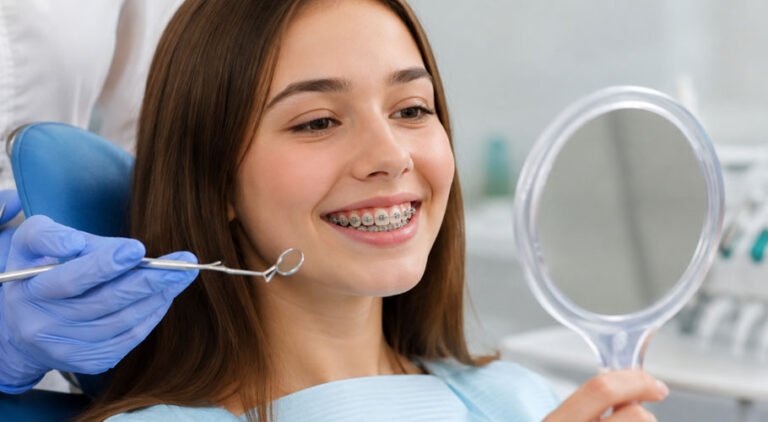
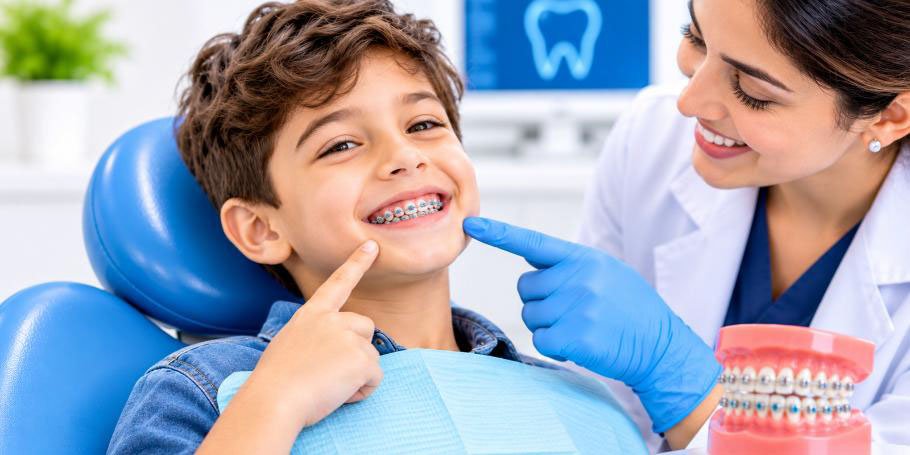
Traditional Braces remain a common orthodontic option for correcting different types of tooth alignment and bite problems.
They use brackets attached to the teeth and connected by a wire that applies controlled pressure to gradually move teeth into better positions.
Depending on the patient’s needs, braces may help:
- Correct crowded or overlapping teeth.
- Close unwanted spaces between teeth.
- Improve certain bite alignment concerns.
- Position teeth for better overall alignment.
- Make some areas easier to clean after treatment.
The length of treatment varies according to the complexity of the case and how teeth respond to movement.
Children wearing braces should attend scheduled appointments and follow their dental provider’s instructions to support treatment progress.
How Can Parents Support Their Child During Orthodontic Care?
Parents play an important role in helping children maintain healthy teeth throughout orthodontic treatment.
Here are some useful habits:
- Encourage brushing twice daily with fluoride toothpaste.
- Help children clean carefully around brackets and wires.
- Introduce daily flossing with suitable cleaning tools.
- Limit sticky candies, hard snacks, and sugary drinks.
- Encourage a balanced diet with fruits, vegetables, and calcium-rich foods.
- Make sure children attend their scheduled dental appointments.
- Follow instructions about retainers and orthodontic appliances.
If a child experiences discomfort, a loose bracket, or a damaged appliance, contact the dental office for guidance rather than attempting major repairs at home.
Frequently Asked Questions
1. Does every child need braces?
No. Some children have naturally well-aligned teeth and healthy bites. An orthodontic evaluation helps determine whether treatment is necessary.
2. When should my child first see an orthodontic provider?
An initial orthodontic screening is generally recommended around age seven. The timing of actual treatment depends on the child’s dental development.
3. Are braces suitable for young children?
Braces may be appropriate for selected children, depending on their dental development and alignment concerns. The provider will determine the right timing.
4. Can orthodontic treatment correct bite problems?
Yes. Depending on the type and severity of the problem, orthodontic appliances may help improve certain bite concerns and tooth alignment.
5. How long does orthodontic treatment take?
Treatment time varies depending on the child’s needs, the complexity of the alignment problem, and the recommended approach. Some cases require longer treatment than others.
6. Is early orthodontic evaluation necessary if my child’s teeth look straight?
It can still be helpful. Some bite and jaw development concerns are not easily noticeable without a professional examination.
Supporting your child’s dental development starts with regular checkups and attention to changes in their smile. Identifying alignment and bite concerns at the appropriate time can help parents make informed decisions about treatment. If you are considering orthodontic care for your child, Burleson Family Dental & Orthodontics can evaluate their dental needs and discuss suitable treatment options.
If you are searching for a family dentist near me, contact Burleson Family Dental & Orthodontics to schedule an appointment and discuss your child’s oral health and orthodontic needs.